

6th May, 2025
7 things you didn’t know about Edinburgh’s queer history
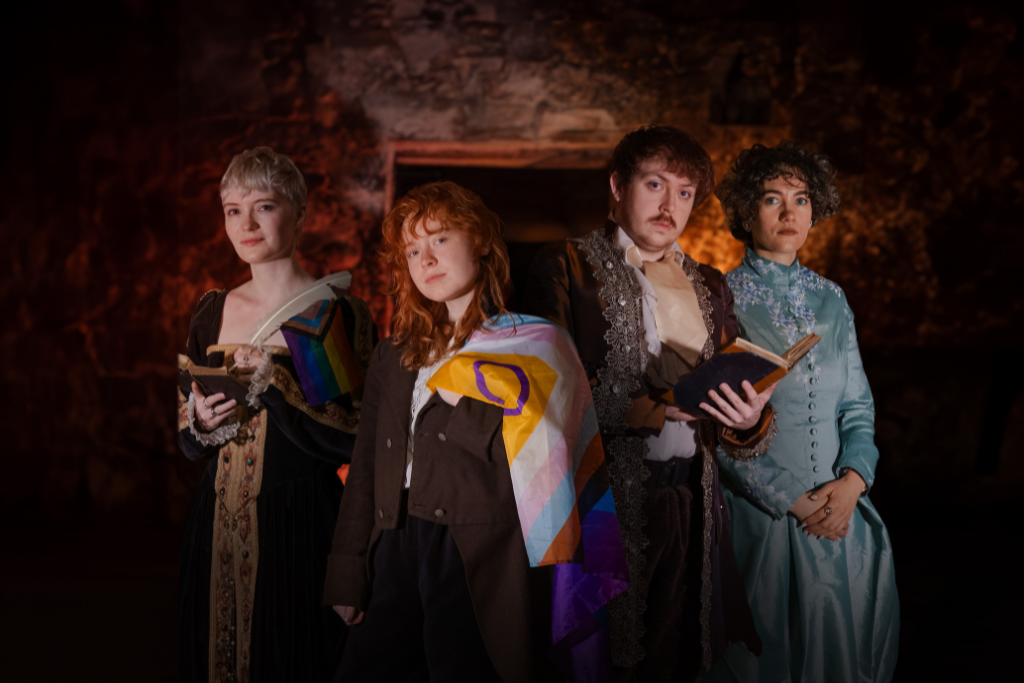
This Pride History Month, we’re peeling back the layers of the past to uncover Edinburgh’s often-overlooked LGBTQIA+ stories. Our Pride History Tour at The Real Mary King’s Close takes you underground to meet the real people who challenged the norms, lived authentically, and left their mark on Scotland’s capital.
Created with the support of LGBT Youth Scotland, the tour is based on the original research of Robert MacRae and Adam Armstrong, and approved by Dr Emma MacLeod of the University of Stirling. What unfolds is a captivating journey through four centuries of queer history hidden beneath the Royal Mile.
Here are 7 fascinating things you’ll learn when you join the tour.
1. Scotland’s first known sodomy conviction happened in Edinburgh
In 1570, John Litster and John Swan were tried in Edinburgh for male sodomy. They were sentenced to be strangled and burned at the stake, a fate usually reserved for witches and heretics. It is a sobering reminder of how dangerous it was to be queer in early modern Scotland.
2. Lord Darnley, Mary Queen of Scots’ husband, had a reputation for being ‘effeminate’
Henry Stuart, also known as Lord Darnley, charmed Queen Mary with music and poetry. But rumours swirled that his closest relationship may have been with Mary’s private secretary, David Rizzio. Historical records mention that they shared a bed and were rarely apart. While many believe Darnley was gay or bisexual, his royal status protected him from the brutal punishments faced by others.
3. King James VI may have loved men more openly than most think
King James VI of Scotland wrote letters filled with longing and affection for his male favourites, including George Villiers, the Duke of Buckingham. He described George as his “sweet child and wife” and himself as George’s “dear dad and husband”. These weren’t secret affairs either. James lived with these men, embraced them publicly, and used his power to shield them from scrutiny.
4. A Scottish woman wrote one of Europe’s first sapphic love poems
Marie Maitland, a 16th-century poet, is believed to have authored a powerful love poem between women in 1586. Her verse, now considered one of the earliest known examples of Sapphic poetry in Europe since ancient times, celebrates emotional and romantic bonds between women with bold and lyrical defiance.
5. Scotland holds the UK’s only known conviction for female sodomy
In 1625, Elspeth Faulds and Margaret Armour of Eaglesham were brought before the church court and ordered never to see each other again. They faced excommunication, which at the time meant social exile. It is the only known case of a conviction for female sodomy in the UK, and speaks volumes about the surveillance and moral judgement faced by queer women.
6. Dr James Barry studied medicine in Edinburgh while living as a man
Assigned female at birth, Dr James Barry transitioned before enrolling at the University of Edinburgh in 1809. He went on to become one of the most respected army surgeons of the 19th century, performing one of the first successful caesarean sections in which both mother and baby survived. Barry lived fully and proudly as a man, and his story begins right here in Edinburgh.
7. The Cape Club offered sanctuary for Robert Fergusson and others on the fringe
Poet Robert Fergusson, a favourite of the Edinburgh arts scene, found camaraderie in the Cape Club, a society that embraced theatrical rituals and playful oaths. Though not a specifically queer space, it was a haven for artists and outcasts. Fergusson’s most heartfelt writings were addressed to male friends, and the club’s homoerotic undertones hint at deeper currents of acceptance and kinship.
You can learn more about Robert Fergusson in this Q&A with Dr. Amy Wilcockson.
These stories are just a glimpse of what lies beneath Edinburgh’s cobbled streets. The Pride History Tour doesn’t just explore the city’s past. It brings to light the lives that history tried to forget.
✨ Step down into Edinburgh’s hidden history and hear the stories that deserve to be remembered. Book your Pride History Tour today.



Continuum Attractions is committed to achieving the highest standards of Health & Safety to all its visitors and employees. We are proud of the processes, systems and procedures we have in place across our business. Health & Safety is much a part of our company culture as our dedication to delivering unique experiences in memorable locations.