

20th Mar, 2023
Edinburgh’s Brewing History Was Made by Women
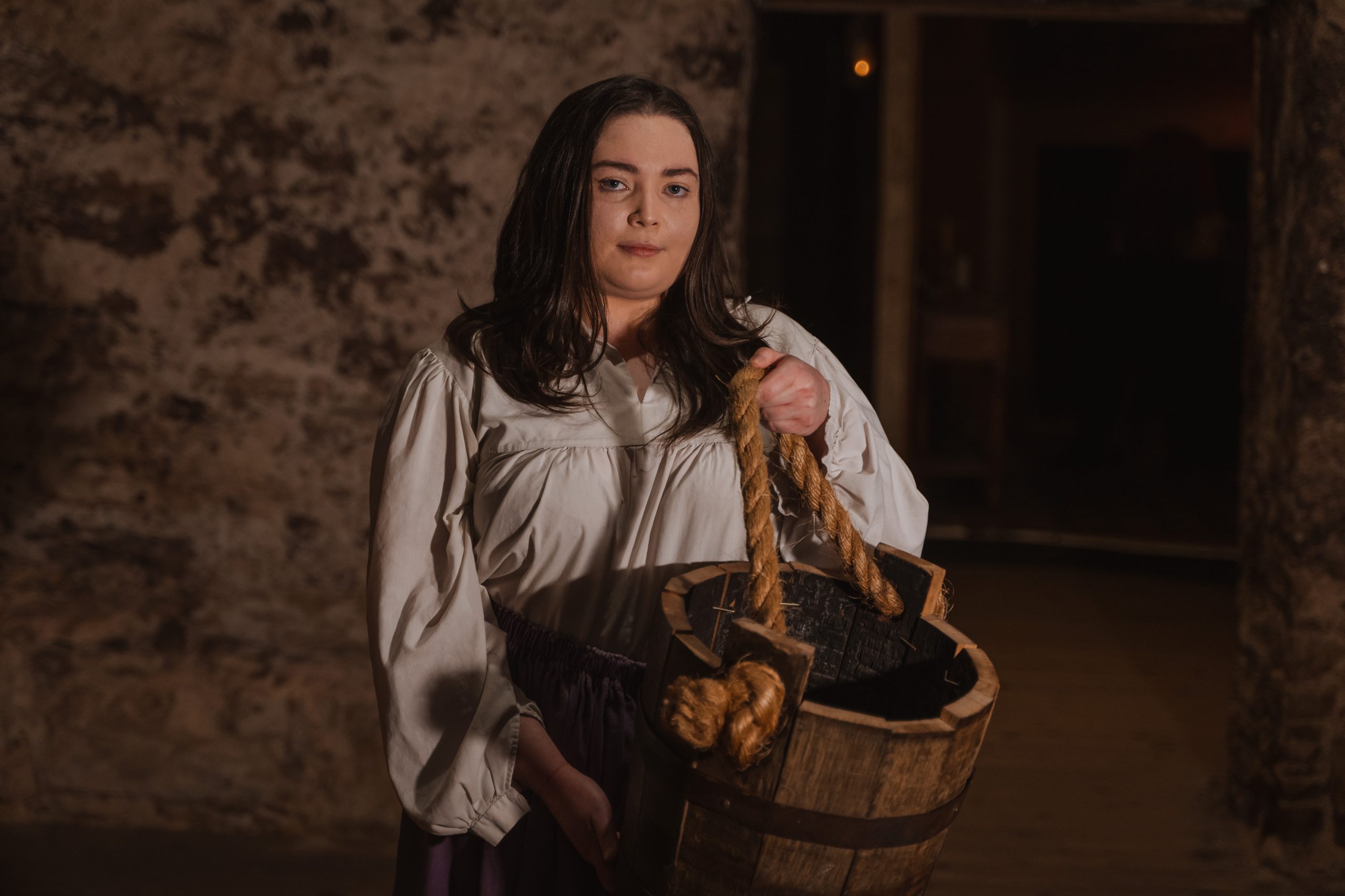
Did you know that Edinburgh’s ale brewing history dates back to the 12th century? Or that it was historically women who practised the trade? Read on to find out why brewing ale was essential to life in Edinburgh, and what happened for the industry to change hands from female entrepreneurs to men…
To celebrate the re-launch of our Herstory Tours, we are sharing stories inspired by the women who lived, worked and made history on the forgotten streets beneath Edinburgh’s Royal Mile.
The tours are running on Fridays and Saturdays in March for Women’s History Month 2023. Click to book now.
Edinburgh’s Early Brewing History
The ale brewing history of Edinburgh dates back to the early 12th century, when David I ordered the construction of Holyrood Abbey in 1128. It didn’t take long for the monks worshipping there to start economising from the natural spring water found near the Canongate.
Fast-forward to the 15th century, however, and monastic control of the commercial brewing industry lessens. Instead, ordinary townsfolk begin to ferment their own ale to sell at their local marketplaces. In particular, the women of the community.
Why was ale important to Edinburgh?
Long story short, Edinburgh ends up with a lack of fresh drinking water. In 1460, James III of Scotland had the marshy land below Edinburgh Castle flooded to provide extra defence. The “Nor Loch”, as it came to be known, quickly filled up with the sewage and waste of Edinburgh’s populace.
It wasn’t until 1674 that the citizens of Edinburgh were able to drink clean water from the Pentland Hills, pumped to wells along the Royal Mile via a network of hollowed-out tree trunks leading to Castlehill Reservoir.
The result? Everyone from townsfolk to royalty had to rely upon ale up until the late 17th century. Queen Margaret Tudor even ordered for the mediaeval brewhouse at Edinburgh Castle to be rebuilt in 1515!
Why did women brew ale?
The reason that women became responsible for the fermentation and sale of ale in Edinburgh was that there was very little money in it. The supply of ale was a household necessity and considered as being a part in parcel of the domestic sphere, which women dominated.
That doesn’t mean to say there wasn’t profit to be made. As time went on, married women partnered with their husbands to run ale brewing businesses. Widows and unmarried women started to brew ale in order to make extra money too. Alison Rough, whose full story you can hear on our Herstory Tour, is a good example of this.
Alison lived on Mary King’s Close with her daughter and son-in-law during the 1530s, and owned a large number of properties in Edinburgh. Because of her wealth, she was able to afford to brew ale on the side to make some extra income.
But, like so many women of the time, the tables turned against her as her wealth and power grew…
Why did the brewing industry change?
It became clear by the mid to late 16th century that ale brewing was a potentially lucrative business. Across Europe, the aim was to exclude women from the enterprise. In Chester, for example, women who were considered of childbearing age (between 14 and 40) were banned from being alewives.
Meanwhile, back in Edinburgh, the Edinburgh Society of Brewers was established in 1596. The trading of ale became regulated and more profitable. Women who had worked hard to keep Edinburgh’s citizens safe in the absence of modern sanitation methods were gradually phased out of the business as more men took interest in the trade.
In recent years, there has been a resurgence of brewing ale in Edinburgh. Uncovering the history of ale making has not only restored the voices of the forgotten women who sustained the city for hundreds of years, but also encouraged more female entrepreneurs to enter the modern brewing industry today.
To hear more about Alison Rough, click here to discover Herstory.



Continuum Attractions is committed to achieving the highest standards of Health & Safety to all its visitors and employees. We are proud of the processes, systems and procedures we have in place across our business. Health & Safety is much a part of our company culture as our dedication to delivering unique experiences in memorable locations.